
Issue No. 2
LIMANTOUR BEACH
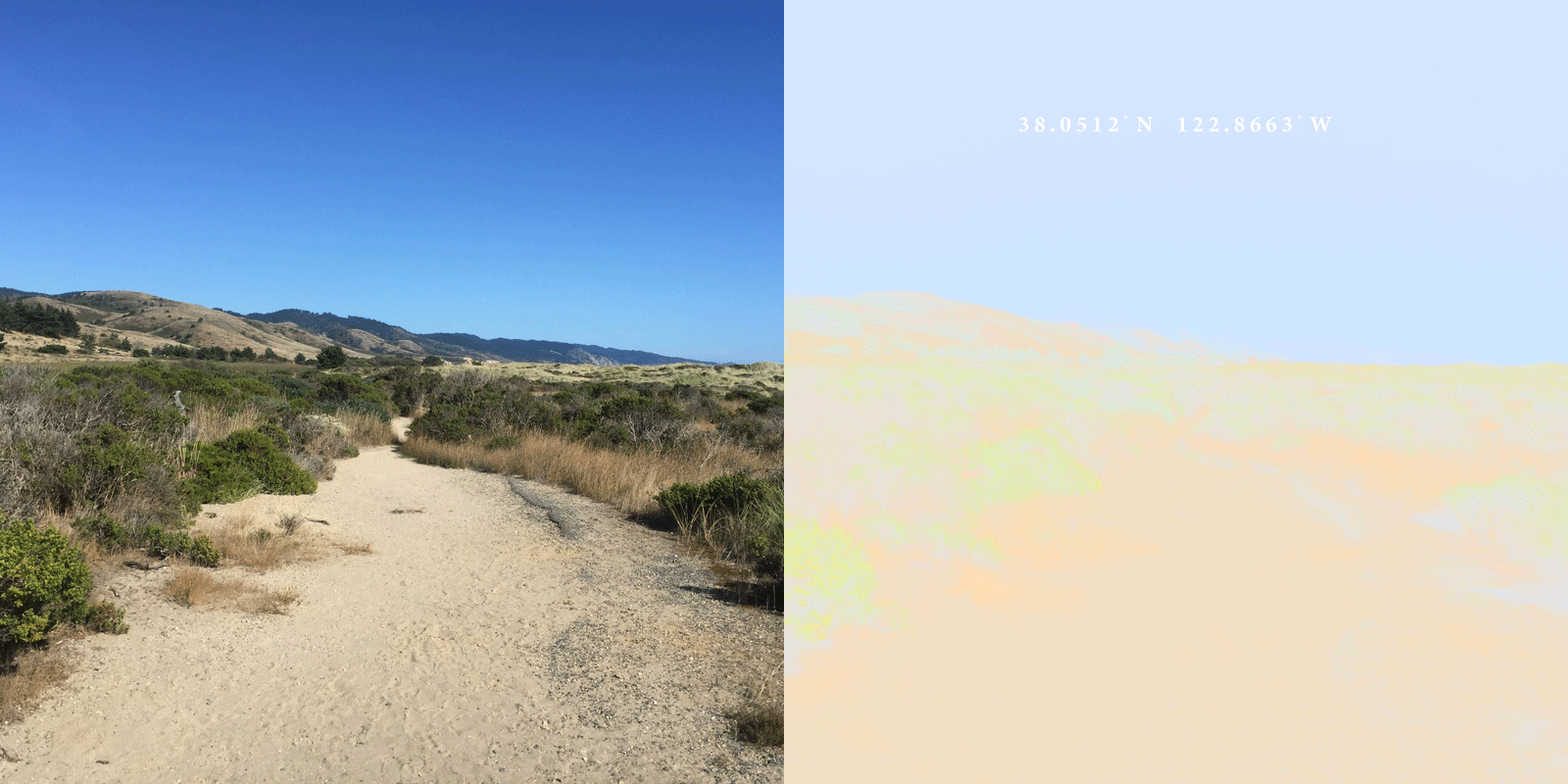
August 24, 2019
I had no agenda. I’d left the remaining nine days of my vacation open because I’d anticipated my partner flying to California to join me for the second half of the trip. But we’d broken up three hours before my flight was scheduled to depart for the first half of the trip.
The last day we were a couple, I’d left work in the evening in high spirits and headed home to finish packing for my overnight flight. I called them to discuss the ride they’d previously offered me to the airport that evening. An argument erupted over the logistics. It spiraled out of control and lasted for approximately three hours. During the middle segment of its duration, I left my house and roamed the aisles of Target looking for battery powered alarm clocks, with the phone pressed to my cheek. A film began to form on the screen from the oils on my face and the day’s makeup. Toward the end of the call something in me had finally broken and I asked them not to come, not to meet me out west. At this stage of the argument I was en route to drop my car off at a cousin’s house nearby so that I wouldn’t get any tickets while away. I’d just run over a curb, nearly clipping a fire hydrant in my hysteria, and was parked on the side of the road. “This isn’t healthy for either of us,” I croaked with my forehead against the steering wheel. I asked if we could meet up when I returned in three weeks to have coffee so that we could assemble some variation of closure. “I'm so sorry this is happening this way,” I said, exhausted with sorrow. “I love you.” They hung up on me. The call ended at 11PM. I started the ignition, continued to my cousin’s house, and then called a car to take me home.
When I returned to my bedroom, I called my best friend, A, in Chicago, and she talked to me while the early hours of the morning ticked by. A was the only person I felt confident would soberly take my calls at midnight, the only person who has caught me in her right hand every time I’ve tripped over my own feet. I sorted through my apps and arranged to have a Lyft drive me to the airport instead.
At 2AM I opened my front door to exit my apartment and enter the car poised in the street. I looked down and noticed two containers of all my things, and all the things I’d given my partner during our relationship, were scattered in a heap on my porch table, like they’d been dumped in a haste. One of the containers was a torn, cardboard Fed-ex envelope. Their name was printed on the shipping label smoothed to the side. Items spilled out of it; my toothbrush, balled up silk pajamas, underwear, trinkets, a plastic slug, a hand-stitched pillow I’d sewn with a funny phrase on the front in Hungarian. I ran my fingers over the black threads that wavered along the seams of the pillow. I picked up the envelope and raked my fingers inside to see what else had been deposited. A pink, silicon butt-plug peeked out at me. Bits of their pubic hair were still attached to it. This was most disturbing and made me feel sick; felt hostile and wicked. There were colorful rocks knocking around from the inside as I turned the envelope to different angles. Teal and opal ones, ones I’d plucked from the ground on a chilly hike in Phoenix last February. The rocks glinted in the prisms of the security flood light mounted to the brick wall above my head. I could picture my ex pacing around their apartment snatching everything from the perimeter that reminded them of me, the envelope the first receptacle they found to deliver the items in, probably from their kitchen counter or the crest of the kitchen trash. It distressed me that they’d breached the boundary of my porch within the last hour without my knowing; my porch positioned directly beside my bedroom window. I didn’t know it then, but this breach of boundaries would continue to violate me for the next six months. I would think about it every time I turned the lights off and climbed into bed, wondering if they’d come back for me some night, unhinged. I dragged the boxes and items inside the house, spilling them into a trail, and left them on the floor just beyond the front door. I intended to manage them upon my return.
My overnight flight in such a condition was hellish and when I arrived in sunny California in the ripeness of morning my face was swollen and bloodshot. I wasn’t aware San Francisco could be so sunny, and adjacent to its cheeriness I looked severely strung out. I was dressed in black fleece leggings and a black t-shirt, unfitting for the warmth of the day. As much as I’d vowed not to, crying over my plastic folding tray during the blood-red hours of the morning, sailing over Rocky Mountains in the troposphere from coast to coast, I stood beside a pillar at baggage claim and immediately plugged my phone into a wall outlet. The apple happily blinked on and I sent a few curt texts to my ex condemning them for leaving our belongings on my patio. Each time I blinked, my eyes burned from soaking in their two salt water sockets. I made my way to the airport tram, sat on a carpeted bench in the back of the car, and stared out the windows. My phone vibrated in my pocket. A bubble appeared on the screen. It read “Do you really mean that?” I did not respond, although it was not a rhetorical question. And I really did mean it.
The tram hurtled along elevated tracks to the rental cars. The procedure was simple; someone handed me the keys to a four door sedan and I drove off the lot, onto the highway, and directly to Marin Headlands, stopping only to purchase a sandwich at an overly priced bodega. The cashier was unfriendly. I parked my car in the parking lot overlooking Rodeo Beach, rolled down the windows, and fell asleep for two hours. When I awoke at 2PM I checked into my room in the hostel on the hillside, where I’d reserved a bed for several days. I spent the remainder of the afternoon recalibrating my nervous system; sipping hot tea and reading a book in the community lounge. The worst was over. I fell asleep at 7:30PM.
At 8AM the next morning I pulled some joggers from my suitcase, laced up my sneakers, and went for a run along a rocky trail that wound beside a windy cliff’s edge. The sky was slate gray. I was surprised when my phone erupted with a surge of alerts, receiving signal for the first time since 3PM the day before. The first text I received was a most long-winded monologue solidifying the breakup in what I interpreted as their best attempt at a heroic and quixotic means to an end. The text felt most apocryphal to me. It was all very cinematic. Roaring winds tore at my cheeks from the turbulent abyss beyond the cliffside and my squinted eyes scanned the little pixels on the screen which I squeezed between palm and thumb. The pixels formed shapes that looked like English words that said phrases like “the hardest part for me is” and “I tried to call you but…” I felt as though an invisible linebacker from the Dallas Cowboys had just jammed their shoulder at high speed directly into my guts. I was unprepared for this succession of blows. I screenshot the monologue, opened a new chat, and sent a copy of the text to my best friend, B. I plugged my left ear with my pointer finger and held the phone to my right ear, knowing B would answer, even though she’d be filled to burst with margaritas while currently partying on a bachelorette cruise somewhere in the Caribbean ocean this weekend. The phone wavered in and out of reception, so I stomped through tall, wet grass and clay sediment in wandering concentric circles until the ringing reverberated louder and louder in my ear drum. I noticed a mother and son watching me from a paved hiking path and I realized I was crouched down in an area marked off with slashes of yellow tape and signs towering overhead that read “DO NOT STEP HERE” and “DANGEROUS UNEVEN TURF.” I felt like a spectacle in a zoo. I felt it might be to my advantage if the patch of earth supporting my weight suddenly broke free and tumbled into the gape of ocean below. B’s voice traveled from her speaker to mine over the line. I could barely hear her over the wind. She said some disparaging things about the character of my ex. It very much helped.
Almost every day forward I’d check in with A and B, and B would ask me every day, from one Caribbean poolside or another, “are you really not going to write him back?” and every day I would pause and consider the question. I never did.
And so there I was eleven days later, at Point Reyes Hostel, lying on my back on the bottom bunk bed in my hostel bedroom in the middle of the day, with the duck-feather comforter pulled up to my chest. I stared blankly at the bottom-side slats of the bunk above me. Thick wooden slats. Navy sheets poked and hung through the bars. There was a long, narrow window on the wall above my head, which I liked. The window made me feel like I was outside, even when I was inside, and a linen curtain flirted lightly in the exhalations of the wind. In my periphery I could see the sky through the screen. It looked pink and gray in the reflected light against the fog. Throaty belches of a crow’s call burped into the bedroom and I felt comforted by the proximity of living things, things with heartbeats. A notebook lay closed next to my face with a pen on top. I wrote so few words during that time, but I felt so much. I was in a kind of numbness from the deafening percussion of a profound sting.
Some afternoons I couldn’t get out of bed. And I didn’t really need to. That’s what happens when you schedule a block of nine consecutive days at a beach hostel in the center of an ocean-side National Park, sixty miles from the nearest city, during a LTR break-up. The hostel was a petite wooden cabin. There was no wifi. Only one Dell computer sat in a corner of the common area with very slow dial up. If I dared to dream of talking to my family or checking an email, I had to drive thirty minutes along treacherous roads with helix curves, obscured by walls of fog, to the closest town with a grocery store and a single bar. I did this from time to time to break up the monotony.
One night, some hostel employees formed a semicircle around the receptionist desk and shot the shit. They were all women, about my age, and I was envious of their unity while my friends were one thousand miles away on the opposite coast. It felt nice to be in the vicinity of such conversations. Lounged on a leather love-seat reading, I wanted to let my book fall slack and say something pertinent to include myself. I let the urge pass so as not to disrupt the melody of their colloquy which I valued more than my own involvement. One of the girls talked about how her boyfriend’s black truck had just been stolen, but they’d gotten it back. They discussed how one of the girls who lived in a shed beside the hostel had spent the day cutting down invasive grasses that grow along the perimeters of the building. The invasive grass is called Cortaderia Jubata. “Jubata,” she spat, for short, and the word sounded novelty and carbonated on her lips. Jubata is native to South America. I’d recognized which grasses were Jubata and naively found it appealing. I felt ashamed that I wasn’t aware of such intellectual botanical information. I wondered what it was like to have strawberry blonde hair, live in a shack thirty miles from the closest, and yet smallest, town, and if my life would be fuller and less complicated if I knew more about and exclusively dealt in the management of Jubata plants.
I got out of bed around three PM feeling peckish. I walked barefoot from the community bedroom into the community kitchen and pulled a damp, sad looking double-bagged paper sack out of the refrigerator and slugged it onto a square, wooden, island table which anchored the center of the room. The kitchen was a deserted landscape of silvery metal rectangles; pots, pans, utensils, knives, and coffee apparatuses hung from their places on the walls in a visual amalgam. I selected tools I needed from the walls and broke a simple egg into a pan over low heat. I stood quietly watching dimples bubble in its milky-white edges. The hostel was barren midday, but artifacts of human life were evident in the slightest trail of coffee grounds on the counter-top. When I squinted harder at them, I discovered they were actually ants, inching out from a silverware drawer. I remembered the woman manning the desk had mentioned an ant infestation problem. Sunlight streamed through the windows across the trail of their bodies. Most tenants were out either hiking trails through the beach scrub or in repose down by the water’s edge. My Levi jeans hung comfortably at my navel. A black one-piece bathing suit was still underneath my clothes and acting as a shirt, stretched over cold, tannish skin.
One of the hostel employees from the night before—the one thrashing Jubata grass—entered the kitchen through the swinging door. She floated past me and began preparing a sandwich. I didn’t mean to stare at her, but it was difficult not to. She moved quietly and gracefully like a specter would, but doing human things like pulling dishes from the cabinets and heaving a massive Tupperware from the shelf with her very human arms. The plastic bin had a piece of masking tape adhered to the lid with black markered letters. The label read “Karen” in clumsy human handwriting. I thought it was a weird name for someone of my age. I didn’t expect anyone named Karen to look so ethereal. Karen lifted the lid and rummaged through the innards of cardboard cracker boxes and cans for her desired ingredients. Karen was white, but her flesh kept a pinkish glow from the sun. My stepmom used to say “you have sun trapped in your skin” after a beach day, and I’ve always speculated on the dermatological scientific possibilities of that. Her hair, which also blushed, was fluffy and bundled in a tousle under a fisherman’s hat. A sun dress of thin, apathetic fabric hung from her clavicles. I turned and leaned forward on the kitchen island. “Do you work here?” I asked in my most approachable tones. She looked up with a relaxed smile and said yes. I asked her what was up with all the signs along the wooden walkway down to the beach—the severe ones about forbidding the removal or relocation of wild plants or animals, dead or alive. “Does that happen frequently?” I asked. “What kind of wildlife?” “Well,” she began, but several hostelites entered the kitchen and initiated their own bustling routines of food preparation. They moved around me and Karen as if by communicating with her I was a ghost now too. She continued in the same tranquil intonation, “two whales washed up this summer. So they were exposed on the beach for a long time. Typically the tide will wash the sand up and over them and cover them, and it did. And normally you’d call animal control to come and take them away, but it's different here since this is a national park. We prefer to let nature take its course. So they will probably wash up again at some point—their bones. I’ve found vertebrae and backbones down there. All kinds of stuff. Actually I found whale vertebrae just yesterday.”
I asked her the location of where exactly the vertebrae laid.