
Issue No. 4
Marvin
Marvin
August 26, 2019
I go on vacations to relax, but relaxing too much gives me anxiety. I rarely sleep-in on vacations. My friends and I like to call this “nervously relaxing.” The next morning I woke up early as usual, dressed, and cooked eggs with spinach in the community kitchen. My posture tightened, standing before the stove, as Marvin walked through the swinging door. He looked better than I had seen him so far. His silky hair was loose around his shoulders and he wore a trendy denim jacket over a fitted white T shirt. He smiled at me and pulled two cups for coffee from the shelf. He prepared the Moka pot, which I’d been avoiding for a week, on the far counter. Sometimes I ask questions just to demonstrate to others that it's okay not to know something. I had met Marvin a few days earlier because I had asked him one morning, in the busy hours of breakfast, “how do you use that coffee maker?” Passing my litmus test for patient, generous souls, he kindly taught me.
I turned off the stove. He poured the two cups of coffee and asked if I minded whether he joined me while I ate. Though I was halfway through my stay in Point Reyes National Park, I still hadn’t mentioned to a living soul that my heart was freshly crushed, or maybe suffocated, under the equivalent weight of a Pacific gray whale. I hadn’t mentioned that I was battling the unfiltered mania and rumination, which commonly stalks one in the slipstream of serious breakups. I was a human husk. Instead of iterating to him how the inside of my body felt vacant like the waxy innards of a crumpled paper cup, I said “sure,” arrested with hands full of plates and we walked toward the dining nook.
He took a dish from my arms and helped me carry the plates into a petite, dim room that branched off of the kitchen. One long, wooden table was in the center of the space and wooden countertops ran along opposite walls on either side, above which were carved porthole windows. It felt like we were on a ship. I made for a seat at the countertop on the sidewall in front of a window. As early as thirteen I learned, like many others learn, that the tenderness in comfort from men, around my sorrow, is not always, but sometimes, threaded with romantic pursuit. And so it is difficult for me to soften while being “comforted,” depending on who the comforting is being done by. Light conversation felt impossible, but I was determined to utter nothing of the breakup during the meal, nothing that would render me in focus as a sexual being. I would allow the company of another person over breakfast to be comfortable enough. I hadn’t spoken at length, in-person, to much of anyone in many days. We kept a distance of one stool between us and I nibbled at the runny eggs and a piece of provolone cheese from the small plate before me.
Marvin occupied the dialogue with a problem he was having. Gesticulating animatedly, the jean jacket slunk down his forearms. He sought my help choosing between two options for his future plans. The first option, he said, would be to sell his truck tomorrow and use the money to buy a one-way ticket to Bali for next week. Once he got to Bali, he could work for a surf camp for a few months. He said he had previously worked at the camp and that he made good money doing it. I was confused. “Do you have to call ahead?” I asked. “How does that work? Can you just show up and they’ll give you a job? What if they already have enough instructors?” He seemed unfettered by these details. The second option was to wait to sell the truck and stay at the hostel for a few more nights. I waited for him to offer a reason as to why this was on the table but there wasn’t one. He simply stopped talking. His eyes flickered up at me and I suddenly realised he may have wanted me to offer a reason. My posture tightened again as if my body was laced with a drawstring secured at my navel. “You should go,” I blurted, gnashing a piece of buttered toast. “Bali sounds awesome. Why not?!” Crumbs fell out of my mouth and onto my shirt. I felt proud of my veritable breeziness. “I guess,” he mumbled. He glanced at my breasts, covered in burnt crumbs, and then the table. He ran a tanned hand through his hair. I looked out the window. He changed the subject. “I’m an artist,” he said. I could drive back to Laguna Beach where my dad lives and finish up this mural I’m working on.” “Oh yeah?” I asked, my interest suddenly piqued. “I’m an artist too,” I offered. We discussed what mediums we prefer and he asked me what I do for money. “I work at National Geographic as a designer during the day,” I explained, “but I make art and I like to write when I’m not working.” This should have been obvious from the moleskins stacked at my elbows everywhere I went. His eyes widened, “Oh my God” he breathed, “have you ever been on one of those National Geographic cruises?” My mind’s eye procured visions of all the National Geographic emails I'd inherited in my work inbox for the last three years and the destinations and prices of the cruises he was referring to. The cruises weren’t just expensive. They weren’t just thousands of dollars. Sometimes they were tens of thousands of dollars. Sometimes they were priced at seventy-thousand dollars a head, often more than not. At this point in my vacation I was so broke that I had struggled to keep my grocery bill for the week just under thirty dollars. After briefly vacationing from our conversation to run the mental math on my destitution, I did a quick check to make sure my eyeballs were positioned tightly in their sockets and hadn’t rolled so far back in my head that they’d traveled down my esophagus and into my intestines. They were securely in place. “No I haven’t,” I replied. “I have,” he said brightly. “I went with my grandma when I was a kid. It was amazing. We went to South America and swam with the puffins.” His expression was alarmingly childlike, as if the vibrancy of his inner colors had been carefully and dependably preserved since adolescence via scientific methods. “Wow that’s so cool. You’re lucky,” I said. I meant it. He continued about Laguna Beach. “Yeah, if I go home I’ll probably try to stay with my dad again. But last time I showed up there he kicked me out because I didn’t have a job. He came home and when he saw me there with all my shit he was so pissed.” At the word pissed, he slapped his hand on the table and bent forward laughing hard. I wasn’t sure how this scenario was funny, but I tried to imagine how it could be. “Then I went to stay with my grandma.” The more Marvin spoke, the more I was able to assemble and compartmentalize a profile of his personal history and economical makeup, but he was beginning to feel more like a cartoon than a real person. “I have my paintings on Instagram. Can I show you?” He tried to pull up the app but there was no cell signal. “Ah it won’t load,” he said. “I have lots of my art in my truck, actually. Can I show you later?” “Sure,” I said. “I have to get going soon, but maybe when I get back later.” The thought of going anywhere near Marvin’s truck alone with him made me uncomfortable. We tapered off our conversation about art and the murals. He mentioned that the city of Laguna Beach often puts out calls for artists to decorate the city for various holidays and not many people apply for the competitions. He said “I apply to all of them and I’ve won at least once every year since 2016. My art is on all the banners that hang from lamp posts all the way down Main Street. And I have a mural in City Hall that’s been there for years.”
Later, I walked out to my car and when I passed his truck I squinted my eyes to peer through the back windows to see if I could make out any art materials. There was a jumble of objects and shadows. I really was curious if his art was good or not.
About a month after my return to Washington, D.C., I sat at my desk staring at the glare on my computer screen, reminiscing on my travels. Marvin came to mind. I pictured the angularity of his cheekbones. That bloodshot eye. I tried to imagine the type of art he would make, if he did. What it would look like. I opened up a Chrome browser window, typed in “Goo..,” and Google populated. In the search bar I entered the keywords “Laguna Beach Marvin artist mural.” A long list of articles appeared on my screen. I combed the entire page, even clicked on some, but none were relevant to my search, or were for the wrong Marvin, or were unrelated entirely. I tried again. “Laguna Beach City Hall mural Marvin.” This query rendered similar results to the first. I paused. I google searched Laguna Beach City Hall and found a phone number. I flipped through the offering of images of the outer perimeter of the building and didn’t see any murals. I did the Google street-view tour.
I picked up my cell phone and thumbed the City Hall phone number from Google into the dial pad. I abandoned my cubicle and walked around the corner of my office to a phone booth, shutting the glass door behind me. A receptionist answered the call. I asked if she knew of anyone named Marvin who had won some competitions for the city to create art for banners on Main Street and about any murals on location at City Hall. She asked for his last name. “I don’t have one,” I said. “I met this person while traveling and unfortunately I lost their phone number. I’d like to hire him to do some work.” She transferred me to the department of recreation, pleasantly asserting they could answer my question. I was giddy. The voice of a woman came over the receiver sounding irritable. I politely repeated my initial question. “You don’t have a last name?” she prodded. “No, I’m so sorry, I don’t,” I apologized. “Well it doesn’t matter anyway,” she said, “there are no murals here.” “Oh.. really?,” I asked. “Are you sure? This person said they painted a huge mural right in the center of City Hall. And all the banners down Main Street.” Sounding even more irritable, she spat “I've worked here for ten years and there are no murals anywhere in any of the buildings. I have no idea what you’re talking about.” Reaching an impasse, I thanked her and we hung up the phone.
Issue No. 3
McClures Beach
McClures Beach
August 25, 2019
The next morning I set out early for Tule Elk reserve at the tip of Point Reyes peninsula. The clouds retreated from the land, reminding me of a sardine-can top peeled back to expose its innards. I could finally see the landscape. Sun, a mercurial commodity, warmed my forearms through the windshield.
While I drove I thought about a lot of things. I thought about Marvin. Marvin was a man staying at Point Reyes hostel, but in a different building. He slept in the larger of the co-ed 26-person community rooms, while I slept in the 6-person female-only dorm. Marvin was arresting. He was about my height, 5’6, with a sculpted face. He had high cheekbones, a broad forehead, and voltaic blue eyes. His ethnicity looked Native American, though I suspect he wasn’t.
One of his voltaic eyes was bloodshot. His left, my right. This eye haunted me. His hair was long, straight, brown, a little greasy, and hung just below his throat. Sometimes he pulled it back in a bun. Sometimes he wore it under a traffic-cone-orange beanie. His skin was tanned and thick. He looked like he’d once been traditionally handsome. Because of his earthly weathering I could not tell if he was thirty-two or fifty-seven at this point in our juncture. He wore very baggy jeans and T-shirts that dwarfed him. I was strangely very attracted to Marvin, but also repulsed by him at once. This combination of sensations privately embarrassed me and I didn’t know why. I think it was the eye.
During the time our bookings at Point Reyes hostel had overlapped, I’d taken to dodging him. He’d begun making a habit of showing up during the varied times I used the kitchen to make breakfast in the morning, frequently wanting to carry on prolonged discussions with me, which I couldn’t figure out how to gracefully exit. Also, it was difficult speaking at length to any human being without divulging information about my breakup, as my brain chemicals were imbalanced and compulsive in their current state.
The night before last, Marvin had returned to the building at sunset. I was reclined in the same leather love-seat in the lounge as I was every evening, reading Henry Miller. I was frowning at a racial slur I’d just discovered in the narrative, which I didn’t remember encountering while reading his books at a younger age. Upon his entrance, Marvin let the heavy door of the cabin slam behind him. All heads in the room turned. He took a step forward and bellowed. “HAS ANYONE BEEN OUTSIDE LATELY? HOO-BOY, I JUST DROVE THROUGH HEAVEN. WE’RE IN HEAVEN!” He raised his arms, squared his chest, and grinned a wild grin. Hostel bunkees sprawled on couches looked wide-eyed at him, then at each other. I smirked into my book. His unmethodical behavior undoubtedly amused me. But I didn’t have the capacity to entertain him in both the mornings and in the evenings, so I pulled the book higher over my face as to not be noticed.
Though, driving to the elk sanctuary in the early morning light, I understood the orthodox proclamation he’d made. Elevated at approximately one-thousand feet, with deadly drop-offs alternating on either side of the road, Point Reyes peninsula did feel quite like heaven. “Am I dead?” I asked aloud. The windows were slightly cracked, creating a suction that thieved the utterance from my lips through atmospheric slits. The further I advanced to the elk sanctuary, the mistier it once again became. The sky was heavily overcast, yet somehow glowing while reflecting the upcoming sun. As far as I felt from civilization, the road was freshly paved and wove smartly between lagoons and prairies and ranches. In the confectionary blossom of clouds, I was a little pink sprinkle zooming through the top layer of icing to the tip of a cake slice. To my left and right I could see nothing beyond the cliff edges except a bulk of pink fog and lavender vapor, expanding, filling in the gap between ocean and sky. The atmosphere felt concave, like a bowl of haze. I couldn’t roll my windows down all the way because the air was too icy, but I wanted to finger its viscosity. It amazed me how quickly and dramatically the meteorology of Point Reyes changed through very curt variances of mileage and time.
I passed mills and farms, land with roaming bulls tagged by the ears. Beastly animals seemed out of place, inhabiting this sliver of tall, narrow earth. How did they get up here? Upon arriving in San Francisco, I’d felt surprised at how much this part of California reminded me of Portugal. The rapid oscillation between cold and hot winds, the coloring and porousness of rocks, and the ribbon-like texture and hues of the meadows. During my stay at the hostel in Marin Headlands a week earlier, I’d sipped a cup of coffee while examining a historical poster tacked to the bulletin board hanging in the lobby. It detailed the history of this specific region of the west coast. I was shocked to read that Portuguese ranchers and gauchos had emigrated from Europe, crossed the broad swath of North America, and settled in the headlands. The temperature and behavior of the Northern California weather reminded them of home. The fur of the livestock they’d brought with them had trapped seedlings and biologies of Portuguese grasslands, which then fell to the soil and created a landscape formerly unique to that of Portugal. It gave me goosebumps that my intuition was so specifically acute. These didn’t just feel and look like Portuguese grasses, they were Portuguese grasses.
I followed the water stained road for over an hour to the very tip of the peninsula, where it came to a finite end, capped by a parking lot. Every spot in the lot was empty, except for one, and I parked exactly next to that car, which I thought was annoying of me. I stepped out of the vehicle, stretched my legs, and felt the dampness of the cool mist on my neck. I rolled my head around on my shoulders and stared down at my feet. They were shroud in wool grey socks, laced over with the straps from rubber camp sandals. I’d discovered the sandals by chance two years ago in a bin marked “free” on the sidewalk of a rich neighborhood in Washington DC. I’d wished I’d brought along my Doc Martens to change into, because of the chill, but they were abandoned inside my suitcase under my bunk an hour away. I wrestled my backpack out of the back seat, tossed a spare granola bar inside, along with a small paper bag containing a grilled cheese, an amorphous grease stain on the front and back of the bag. I added a water bottle to the cache of items and slung the bag over my shoulders, clipping it securely across my chest.
There were several worn paths departing from the parking lot. I wasn’t clear which would take me to the elk preserve. The parking lot was situated beside a squat, abandoned, historic village with plaques beside timeworn structures, each of which was peeling with white paint along its wooden beams. The windows of each building were vessels to black, hollow insides devoid of light. There were picnic tables amuck. Everything looked wet. A few footpaths led through the village. Some led around it. Some led in the opposite direction. I consulted a signpost with a hiker’s map, but the shoddy illustration only confused me more. I grew impatient from indecision and selected the foot-path leading away from the parking lot, emptying onto an older, crumbling street. The asphalt stretched down a slope, and I had to deviate around a closed metal gate which was blocking off a second parking lot, which was comically gargantuan and apparently unnecessary as I was seemingly the only person at the elk preserve. But then I remembered that it might be 8AM on a weekday. I tried to remember what day it was. I couldn’t recall.
The fog was still so thick that I could see at most ten feet ahead of me. I heard a reverberation from beyond the mist that sounded unlike anything I’d ever heard before. I was unsure if it was ahead of or behind me. It sounded like the scream of a metal door swinging on rusty hinges, but also as though it erupted from warm lungs. I turned to see if the gate had opened behind me, though I knew in my gut it’d be closed, which it was. Up ahead, at the center of the parking lot, was an enormous sink-hole. Crushed chips of pavement, two to four feet in diameter, dangled inside dejectedly from their seams along the edge. Something about this vision gave me anxiety. At the tip of the peninsula, in a time-lapsed place, the earth had swallowed itself, taking fresh gulps of air, and it made no difference to anyone. This land felt like a degree of comatose.
I stepped around the perimeter of the hole, my fingertips turning pink, thumbing the shoulder straps of my backpack. It was heavier than I thought it should be. I then realized I’d forgotten to remove my laptop from it the night before. It seemed very silly all of the sudden to be carrying a dead laptop around a purgatorial elk preserve. Technology was very out of context here; a cutting edge, revolutionary advancement: totally useless. Sixty miles south in San Francisco was the laptop life. The machine contained precious data; my airline tickets, the photographic records of my personal life history, work projects, timelines, access to many of my social communities, and yet it felt as ineffectual as the concrete slabs which leaned into the sinkhole. I imagined the liberation of tossing it in there, and my cellphone too, my sweet beloved, listening to them clatter all the way down to the bottom of the hole. I imagined the devices bursting from a geyser on the opposite side of the earth, or maybe in China, like in an old-timey cartoon, which would be exceptionally ironic because they would quite literally meet their maker.
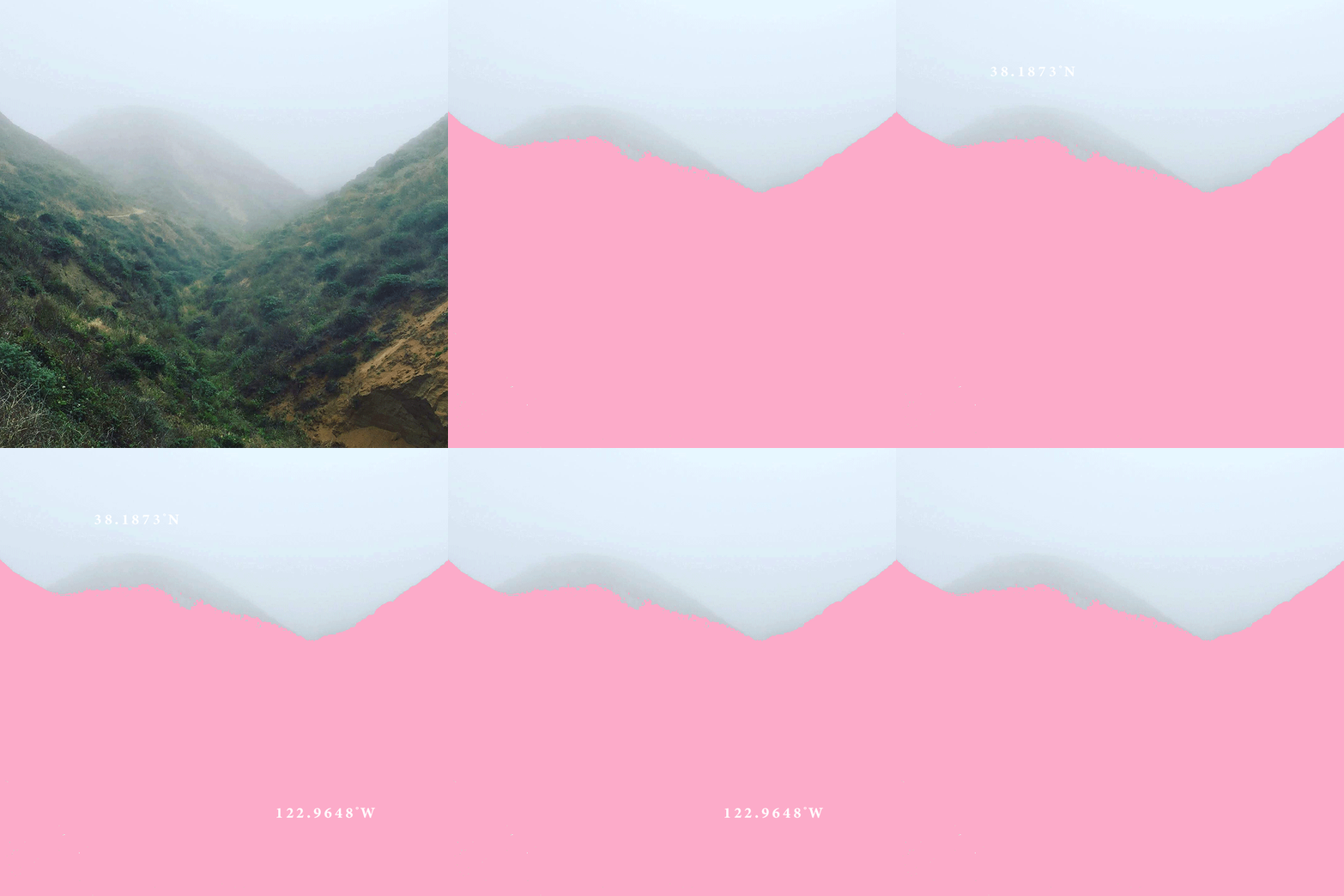
At the border of parking-lot number two I reached a sandy trail that dipped and rolled between lumpy knolls. I consulted a paper map I remembered that I’d grabbed from the front desk and jammed in my pants pocket that morning. I discovered that I’d taken the wrong route and was heading not to the elk preserve proper, but descending via switchbacks to the base of the peninsula, arriving at McClures Beach. I noticed, however, there were no clear demarcation lines for where the elk preserve started and stopped. The elk, I imagined, ruled the entire tip of the island. I was frustrated, but figured I may as well continue onward, as McClures Beach was only a half mile out and back hike at this point.
Each of my downward steps were short and abbreviated and the souls of my sandals dug into the sand, catapulting it all across the tops of my woolly socks. My knees locked and I balanced the weight of the backpack which tilted forward on my shoulder blades. The palette of McClures trail was mixed with rust, and slate, and rich deep greens, and beiges. Petite yellow flowers decorated long needle grasses in the dense banks on either side.
I almost fell forward from an abrupt halt when I noticed a snake meditating in a coil in the sand a few steps ahead. I knew what I thought of the snake, what all of human history has stigmatized over the reputation of snakes, but as we remained poised, studying one another’s frames, I wondered what the snake thought of me. When I was a child I loved snakes. And I loved dinosaurs, and I loved every living reptilian thing with scales. But I especially loved snakes. I was a snake freak. I romped the forested plots beside my childhood home—we lived far from the center of town—and would retrieve critter skeletons and snakeskins and hides from the Florida backwoods to bring home and present to my horrified mother. She was humorously respectful and graceful in her careful reception, but suggested routinely that I wash my hands. Snakes hadn’t changed much in format since my childhood, but I had. I gathered the courage to side step it. As soon as I lifted an ankle, it sensed the vibration in the earth and slithered into the coastal scrub.
I pulled the crumpled paper map back out of my pocket and studied the minutiae of the printed decimal point and five and impatiently stuffed it back into my jeans. The trail was only listed as a half mile distance, but the steepness and the sand strained my calves. The course ahead mingled into a valley of sorts, between two tall bluffs, as if a line had been drawn between the pinched shoulders of a shrugging giant. I trudged further and further down the slope, watching my sandals, but couldn’t help feeling as though I was pressed under the weight of a gaze. I tilted my head upward and was alarmed by a harem of elk flushed against the sky, looking down at me from the bluff. Their bottom halves were obscured by shrubbery, but there was no mistaking the artistry in the slenderness of their necks and the thickness of their coats. I had never experienced this genre of raptness. Their horns combed sheets of steam and I wondered for how long they’d been observing me from above, clumsily plodding through the sand on dumb bi-pedaling legs. Had they witnessed my stand-off with the snake?
I tenderly slid my phone out of my jacket pocket and cautiously raised it to eyebrow-level to take their picture. Their grandiose forms dissolved into puny silhouettes through the manufactured iPhone screen. It just wasn’t enough, wasn’t at all accurate. The biggest elk in the gang rocked its head backward and released a noise that cut through the air like shards of oxidized minerals. It was exactly the noise I’d heard earlier in the parking lot. (I would get used to this noise during my stay in Point Reyes—as used to it as one can get—and would hear it days later in the marshes, again on a hike, buried under swampy canopies near Limantour beach). At this, the elk migrated lazily over the edge of the bluff, one by one, out of sight, grazing still, but keeping their gazes fastened to my face while departing.
I continued walking, thinking this time of Karen. I thought about our conversation in the kitchen yesterday and how it had a sweet stillness to it, discussing the epic cycles of whale decomposition, as hungry omnivores had bustled around us attending to their hunger, ingestion, and all the life they still possessed.
Finally, reaching the end of the trail, a stream rushed to its base and spilled into a pool. I dipped my hand in the clear, cool water to feel the temperature—something humans are frequently inclined to do, though the results are consistently similar. My suspicions were correct. The water felt chilly. I stepped out onto the flat plateau of the beach and squinted. It was vast. The distance from the base of the bluffs to the water’s edge was approximately seventy five feet. The landscape was fairly monotone, which accentuated the vastness. The maps of Point Reyes spoke in foreboding language about the beaches in this region of the peninsula. I was scared to inch any closer to the jawline of the surf. Little characters in italics, which had been printed over the ocean portions of the maps, had read “check tide tables before walking on beaches.” And “rising water can trap you against a cliff with no possibility of escape.” That one was particularly horrifying. And “the pounding surf, rip currents, and severe undertow are treacherous, especially at McClures Beach, Kehoe Beach, and Point Reyes Beaches north and south.” Oh, and “stay away from the water.” I crept a few more steps in the direction of the sea, fearing every judicious stride a reckless beckon to a rogue tsunami wave to steal my puny human form away. I investigated the packed, damp, sands of the ground for more of nature’s miscreants. No snakes, but I examined some leftover charred wood bits from a bonfire and also relics that appeared to be byproducts of merriment, which I strongly interpreted as having been from a birthday party. I tried to imagine a birthday party, or any effervescent celebration, here in this grey, in this barrenness, on this stainless steal beach.
The ocean spray pounding the shore created a translucent static that pulsed into the air, kind of like heat waves rising from pavement in the summertime. It obscured the edges of my breadth of view, like white sheets had been draped over the edges of a panorama by God hands. Continuing to scan the ground, there were vibrant fragments of plastic and pithy ribbons of orange peel. And then there was a coyote.
It looked at me and I looked at it. For a long moment it held a bored expression. And then it turned toward the water. I stood both afraid and entranced, observing as it trotted toward the waves and away from me. I willed it to return. It stood silhouetted by a paper-white background, framed by a static wall of crashing sea-foam, and looked back at me. Had anyone warned it about the sneaker waves? About the undertow? Had anyone educated it on the printed log of timetables for the surf cycles? I thought I’d read somewhere that birds and other animals, but especially birds, are so present and sensitive that they can synthesize tremors across the atmosphere moments before a tsunami strike, fleeing to safety. I speculated whether or not the coyote possessed these intuitive gifts. Could it smell my grilled cheese?
I hung out on the beach for a while, not particularly because I wanted to, but because I felt like I should. McClures Beach felt spooky to me. It was nothing like the beaches I grew up beside in Florida, which felt juvenile, silly, pastel in comparison to these beaches; like comparing a baby-shower to an austere Scythian quest. In Point Reyes all things were exaggerated. If the sky could be described as overcast, it felt more like an everlastingness of bleak. I went for a short walk along the base of the bluffs, casually debating the odds of which would kill me first: a snake, a rogue wave, or a coyote. I wobbled around the corner of an undulating cliff wall and found a crude collage of black feathers artfully framing the carcass of a carrion bird at my feet.
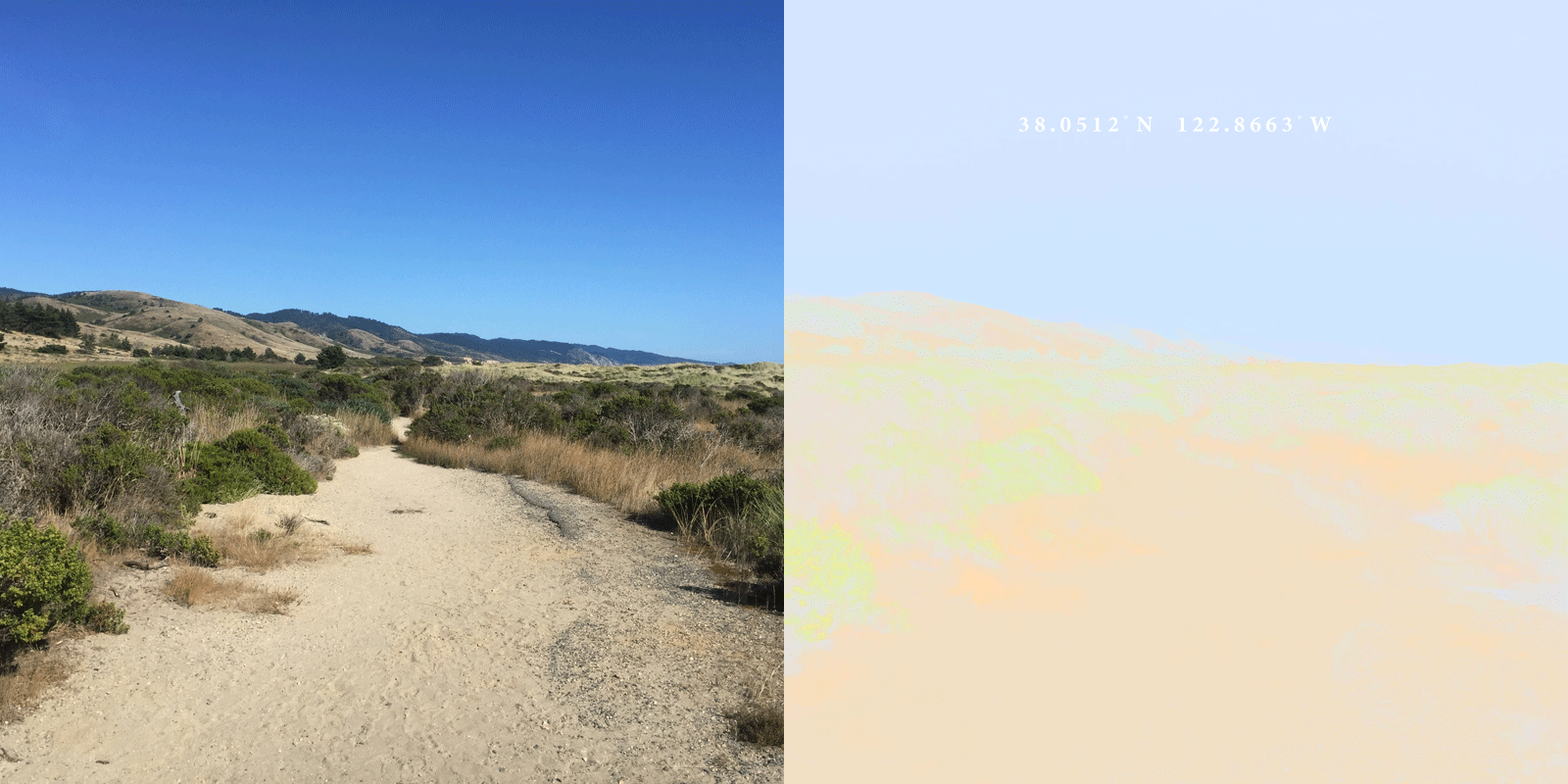
Issue No. 2
LIMANTOUR BEACH
LIMANTOUR BEACH
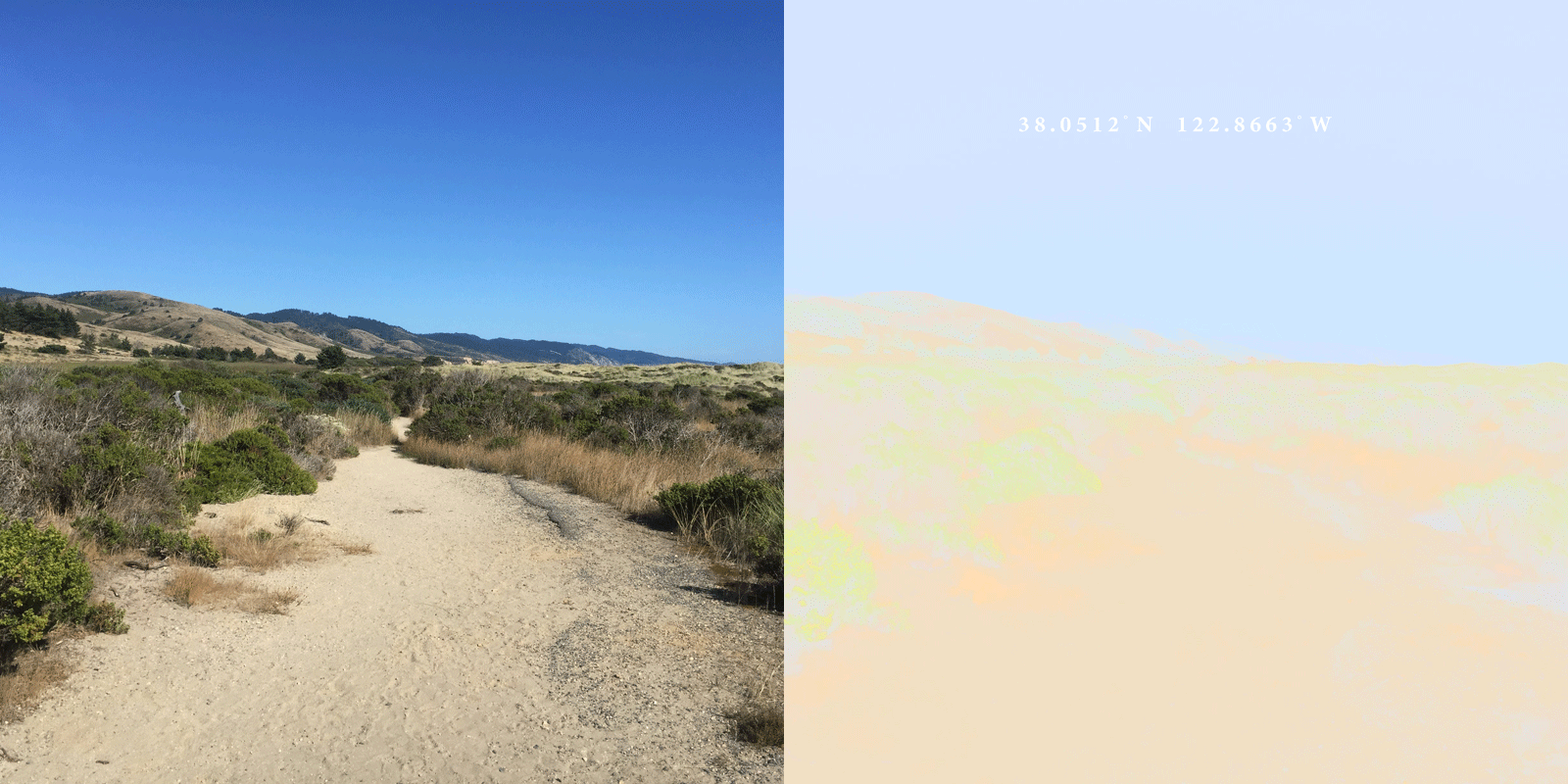
August 24, 2019
I had no agenda. I’d left the remaining nine days of my vacation open because I’d anticipated my partner flying to California to join me for the second half of the trip. But we’d broken up three hours before my flight was scheduled to depart for the first half of the trip.
The last day we were a couple, I’d left work in the evening in high spirits and headed home to finish packing for my overnight flight. I called them to discuss the ride they’d previously offered me to the airport that evening. An argument erupted over the logistics. It spiraled out of control and lasted for approximately three hours. During the middle segment of its duration, I left my house and roamed the aisles of Target looking for battery powered alarm clocks, with the phone pressed to my cheek. A film began to form on the screen from the oils on my face and the day’s makeup. Toward the end of the call something in me had finally broken and I asked them not to come, not to meet me out west. At this stage of the argument I was en route to drop my car off at a cousin’s house nearby so that I wouldn’t get any tickets while away. I’d just run over a curb, nearly clipping a fire hydrant in my hysteria, and was parked on the side of the road. “This isn’t healthy for either of us,” I croaked with my forehead against the steering wheel. I asked if we could meet up when I returned in three weeks to have coffee so that we could assemble some variation of closure. “I'm so sorry this is happening this way,” I said, exhausted with sorrow. “I love you.” They hung up on me. The call ended at 11PM. I started the ignition, continued to my cousin’s house, and then called a car to take me home.
When I returned to my bedroom, I called my best friend, A, in Chicago, and she talked to me while the early hours of the morning ticked by. A was the only person I felt confident would soberly take my calls at midnight, the only person who has caught me in her right hand every time I’ve tripped over my own feet. I sorted through my apps and arranged to have a Lyft drive me to the airport instead.
At 2AM I opened my front door to exit my apartment and enter the car poised in the street. I looked down and noticed two containers of all my things, and all the things I’d given my partner during our relationship, were scattered in a heap on my porch table, like they’d been dumped in a haste. One of the containers was a torn, cardboard Fed-ex envelope. Their name was printed on the shipping label smoothed to the side. Items spilled out of it; my toothbrush, balled up silk pajamas, underwear, trinkets, a plastic slug, a hand-stitched pillow I’d sewn with a funny phrase on the front in Hungarian. I ran my fingers over the black threads that wavered along the seams of the pillow. I picked up the envelope and raked my fingers inside to see what else had been deposited. A pink, silicon butt-plug peeked out at me. Bits of their pubic hair were still attached to it. This was most disturbing and made me feel sick; felt hostile and wicked. There were colorful rocks knocking around from the inside as I turned the envelope to different angles. Teal and opal ones, ones I’d plucked from the ground on a chilly hike in Phoenix last February. The rocks glinted in the prisms of the security flood light mounted to the brick wall above my head. I could picture my ex pacing around their apartment snatching everything from the perimeter that reminded them of me, the envelope the first receptacle they found to deliver the items in, probably from their kitchen counter or the crest of the kitchen trash. It distressed me that they’d breached the boundary of my porch within the last hour without my knowing; my porch positioned directly beside my bedroom window. I didn’t know it then, but this breach of boundaries would continue to violate me for the next six months. I would think about it every time I turned the lights off and climbed into bed, wondering if they’d come back for me some night, unhinged. I dragged the boxes and items inside the house, spilling them into a trail, and left them on the floor just beyond the front door. I intended to manage them upon my return.
My overnight flight in such a condition was hellish and when I arrived in sunny California in the ripeness of morning my face was swollen and bloodshot. I wasn’t aware San Francisco could be so sunny, and adjacent to its cheeriness I looked severely strung out. I was dressed in black fleece leggings and a black t-shirt, unfitting for the warmth of the day. As much as I’d vowed not to, crying over my plastic folding tray during the blood-red hours of the morning, sailing over Rocky Mountains in the troposphere from coast to coast, I stood beside a pillar at baggage claim and immediately plugged my phone into a wall outlet. The apple happily blinked on and I sent a few curt texts to my ex condemning them for leaving our belongings on my patio. Each time I blinked, my eyes burned from soaking in their two salt water sockets. I made my way to the airport tram, sat on a carpeted bench in the back of the car, and stared out the windows. My phone vibrated in my pocket. A bubble appeared on the screen. It read “Do you really mean that?” I did not respond, although it was not a rhetorical question. And I really did mean it.
The tram hurtled along elevated tracks to the rental cars. The procedure was simple; someone handed me the keys to a four door sedan and I drove off the lot, onto the highway, and directly to Marin Headlands, stopping only to purchase a sandwich at an overly priced bodega. The cashier was unfriendly. I parked my car in the parking lot overlooking Rodeo Beach, rolled down the windows, and fell asleep for two hours. When I awoke at 2PM I checked into my room in the hostel on the hillside, where I’d reserved a bed for several days. I spent the remainder of the afternoon recalibrating my nervous system; sipping hot tea and reading a book in the community lounge. The worst was over. I fell asleep at 7:30PM.
At 8AM the next morning I pulled some joggers from my suitcase, laced up my sneakers, and went for a run along a rocky trail that wound beside a windy cliff’s edge. The sky was slate gray. I was surprised when my phone erupted with a surge of alerts, receiving signal for the first time since 3PM the day before. The first text I received was a most long-winded monologue solidifying the breakup in what I interpreted as their best attempt at a heroic and quixotic means to an end. The text felt most apocryphal to me. It was all very cinematic. Roaring winds tore at my cheeks from the turbulent abyss beyond the cliffside and my squinted eyes scanned the little pixels on the screen which I squeezed between palm and thumb. The pixels formed shapes that looked like English words that said phrases like “the hardest part for me is” and “I tried to call you but…” I felt as though an invisible linebacker from the Dallas Cowboys had just jammed their shoulder at high speed directly into my guts. I was unprepared for this succession of blows. I screenshot the monologue, opened a new chat, and sent a copy of the text to my best friend, B. I plugged my left ear with my pointer finger and held the phone to my right ear, knowing B would answer, even though she’d be filled to burst with margaritas while currently partying on a bachelorette cruise somewhere in the Caribbean ocean this weekend. The phone wavered in and out of reception, so I stomped through tall, wet grass and clay sediment in wandering concentric circles until the ringing reverberated louder and louder in my ear drum. I noticed a mother and son watching me from a paved hiking path and I realized I was crouched down in an area marked off with slashes of yellow tape and signs towering overhead that read “DO NOT STEP HERE” and “DANGEROUS UNEVEN TURF.” I felt like a spectacle in a zoo. I felt it might be to my advantage if the patch of earth supporting my weight suddenly broke free and tumbled into the gape of ocean below. B’s voice traveled from her speaker to mine over the line. I could barely hear her over the wind. She said some disparaging things about the character of my ex. It very much helped.
Almost every day forward I’d check in with A and B, and B would ask me every day, from one Caribbean poolside or another, “are you really not going to write him back?” and every day I would pause and consider the question. I never did.
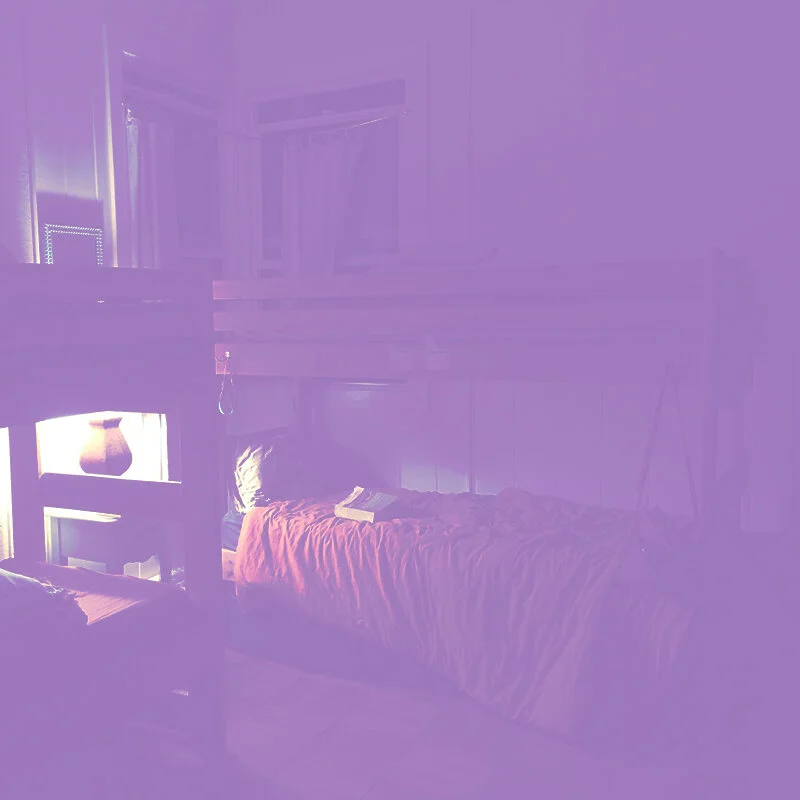
And so there I was eleven days later, at Point Reyes Hostel, lying on my back on the bottom bunk bed in my hostel bedroom in the middle of the day, with the duck-feather comforter pulled up to my chest. I stared blankly at the bottom-side slats of the bunk above me. Thick wooden slats. Navy sheets poked and hung through the bars. There was a long, narrow window on the wall above my head, which I liked. The window made me feel like I was outside, even when I was inside, and a linen curtain flirted lightly in the exhalations of the wind. In my periphery I could see the sky through the screen. It looked pink and gray in the reflected light against the fog. Throaty belches of a crow’s call burped into the bedroom and I felt comforted by the proximity of living things, things with heartbeats. A notebook lay closed next to my face with a pen on top. I wrote so few words during that time, but I felt so much. I was in a kind of numbness from the deafening percussion of a profound sting.
Some afternoons I couldn’t get out of bed. And I didn’t really need to. That’s what happens when you schedule a block of nine consecutive days at a beach hostel in the center of an ocean-side National Park, sixty miles from the nearest city, during a LTR break-up. The hostel was a petite wooden cabin. There was no wifi. Only one Dell computer sat in a corner of the common area with very slow dial up. If I dared to dream of talking to my family or checking an email, I had to drive thirty minutes along treacherous roads with helix curves, obscured by walls of fog, to the closest town with a grocery store and a single bar. I did this from time to time to break up the monotony.
One night, some hostel employees formed a semicircle around the receptionist desk and shot the shit. They were all women, about my age, and I was envious of their unity while my friends were one thousand miles away on the opposite coast. It felt nice to be in the vicinity of such conversations. Lounged on a leather love-seat reading, I wanted to let my book fall slack and say something pertinent to include myself. I let the urge pass so as not to disrupt the melody of their colloquy which I valued more than my own involvement. One of the girls talked about how her boyfriend’s black truck had just been stolen, but they’d gotten it back. They discussed how one of the girls who lived in a shed beside the hostel had spent the day cutting down invasive grasses that grow along the perimeters of the building. The invasive grass is called Cortaderia Jubata. “Jubata,” she spat, for short, and the word sounded novelty and carbonated on her lips. Jubata is native to South America. I’d recognized which grasses were Jubata and naively found it appealing. I felt ashamed that I wasn’t aware of such intellectual botanical information. I wondered what it was like to have strawberry blonde hair, live in a shack thirty miles from the closest, and yet smallest, town, and if my life would be fuller and less complicated if I knew more about and exclusively dealt in the management of Jubata plants.
I got out of bed around three PM feeling peckish. I walked barefoot from the community bedroom into the community kitchen and pulled a damp, sad looking double-bagged paper sack out of the refrigerator and slugged it onto a square, wooden, island table which anchored the center of the room. The kitchen was a deserted landscape of silvery metal rectangles; pots, pans, utensils, knives, and coffee apparatuses hung from their places on the walls in a visual amalgam. I selected tools I needed from the walls and broke a simple egg into a pan over low heat. I stood quietly watching dimples bubble in its milky-white edges. The hostel was barren midday, but artifacts of human life were evident in the slightest trail of coffee grounds on the counter-top. When I squinted harder at them, I discovered they were actually ants, inching out from a silverware drawer. I remembered the woman manning the desk had mentioned an ant infestation problem. Sunlight streamed through the windows across the trail of their bodies. Most tenants were out either hiking trails through the beach scrub or in repose down by the water’s edge. My Levi jeans hung comfortably at my navel. A black one-piece bathing suit was still underneath my clothes and acting as a shirt, stretched over cold, tannish skin.
One of the hostel employees from the night before—the one thrashing Jubata grass—entered the kitchen through the swinging door. She floated past me and began preparing a sandwich. I didn’t mean to stare at her, but it was difficult not to. She moved quietly and gracefully like a specter would, but doing human things like pulling dishes from the cabinets and heaving a massive Tupperware from the shelf with her very human arms. The plastic bin had a piece of masking tape adhered to the lid with black markered letters. The label read “Karen” in clumsy human handwriting. I thought it was a weird name for someone of my age. I didn’t expect anyone named Karen to look so ethereal. Karen lifted the lid and rummaged through the innards of cardboard cracker boxes and cans for her desired ingredients. Karen was white, but her flesh kept a pinkish glow from the sun. My stepmom used to say “you have sun trapped in your skin” after a beach day, and I’ve always speculated on the dermatological scientific possibilities of that. Her hair, which also blushed, was fluffy and bundled in a tousle under a fisherman’s hat. A sun dress of thin, apathetic fabric hung from her clavicles. I turned and leaned forward on the kitchen island. “Do you work here?” I asked in my most approachable tones. She looked up with a relaxed smile and said yes. I asked her what was up with all the signs along the wooden walkway down to the beach—the severe ones about forbidding the removal or relocation of wild plants or animals, dead or alive. “Does that happen frequently?” I asked. “What kind of wildlife?” “Well,” she began, but several hostelites entered the kitchen and initiated their own bustling routines of food preparation. They moved around me and Karen as if by communicating with her I was a ghost now too. She continued in the same tranquil intonation, “two whales washed up this summer. So they were exposed on the beach for a long time. Typically the tide will wash the sand up and over them and cover them, and it did. And normally you’d call animal control to come and take them away, but it's different here since this is a national park. We prefer to let nature take its course. So they will probably wash up again at some point—their bones. I’ve found vertebrae and backbones down there. All kinds of stuff. Actually I found whale vertebrae just yesterday.”
I asked her the location of where exactly the vertebrae laid.
The Magnet
PUSHING AND PULLING SINCE 1989 🎂
Issue No. 2 | Limantour Beach
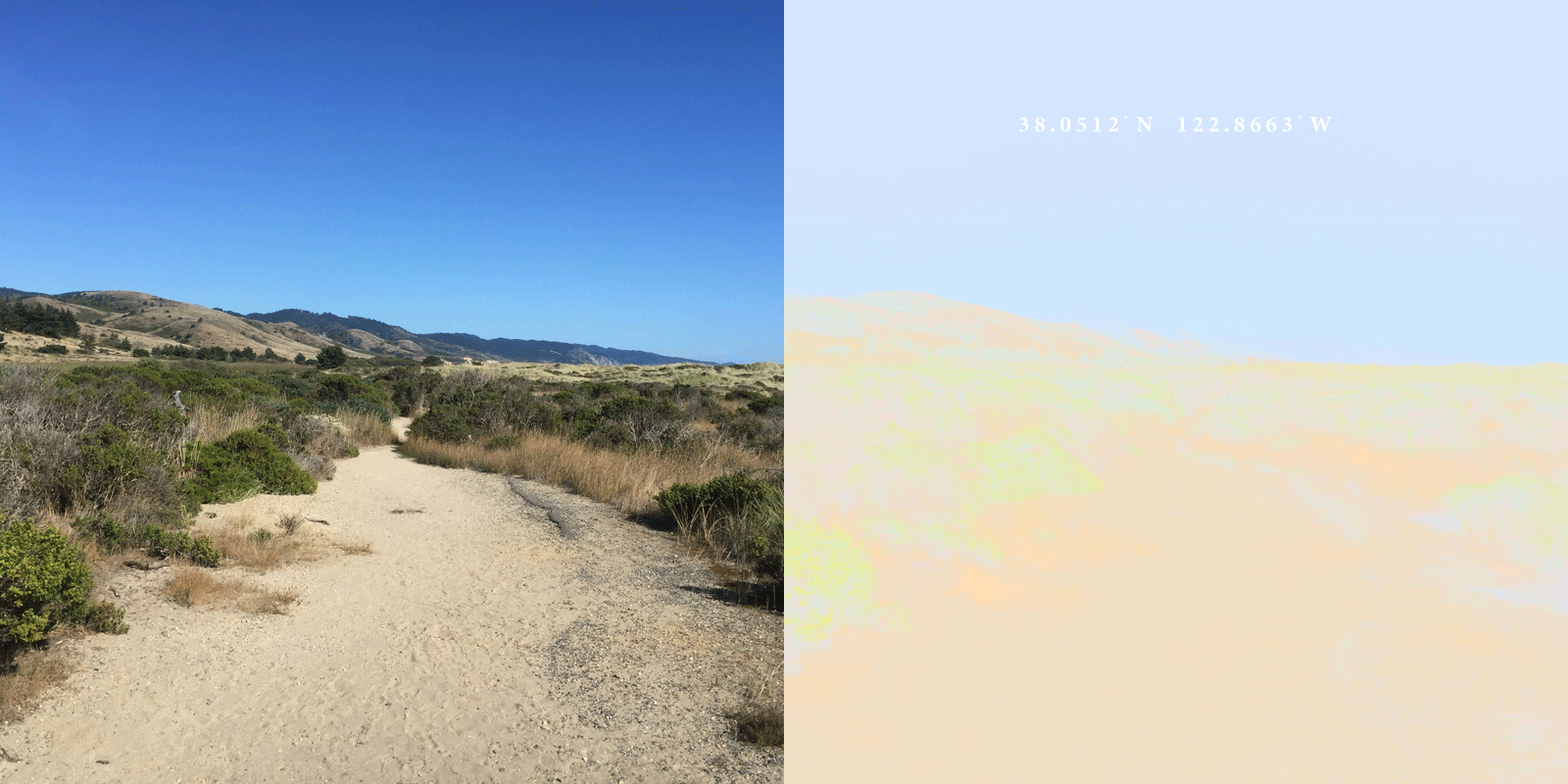
August 24, 2019
I had no agenda. I’d written down some things that I’d been curious to see, but having a pre-planned schedule of things to do in a place I’ve never been feels funny sometimes when I actually arrive there. How could a past-version of myself possibly know what a future-version of myself would like to do, in a place the past-version of me has never been? Sometimes on vacations I look at the itinerary the past-version of me labored over only a few weeks earlier as if it were written by a stranger. There are often adjustments needing to be made. Half the time I wonder if I should scrap the itinerary entirely and spend the majority of time laying in bed. I question from where this internal pressure has come, to do and see everything I can in the small window I’ve allotted for myself. If I do choose to sleep away my vacation, there is no one to scold me for my laziness. So when I do leave the bed to do things, in this school of thought, I end up feeling very adult, very responsible.
I’d left the remaining nine days of my vacation open because I’d anticipated my partner flying to California to join me for the second half of the trip. But we’d broken up three hours before my flight was scheduled to depart for the first half of the trip.
The last day we were a couple I’d left work in the evening in high spirits and headed home to finish packing for my overnight flight. I called them to discuss the ride they’d previously offered me to the airport. An argument erupted. It lasted approximately three hours. There was lots of crying, a bounty of tension. During one segment I left my house and roamed the aisles of Target looking for battery powered alarm clocks with my phone fixed to my cheek. Toward the end of the call I asked them not to come, not to meet me out west. At this stage of the argument I was en route to drop off my car off at a cousin’s house nearby so that I wouldn’t get any tickets while away. I’d just run over a curb, nearly clipping a fire hydrant in my hysteria, and was parked on the side of the road. “This isn’t healthy for either of us,” I croaked with my forehead against the steering wheel. I asked if we could meet up to have coffee so that we could get some closure when I returned in three weeks. “I'm so sorry this is happening this way,” I said, “I love you.” They hung up on me. The call ended at 11PM. I finished the drive to my cousin’s house and surrendered my Mitsubishi to the night. I called a car to deliver me home. By 2AM I opened my front door to exit my apartment and enter the Lyft poised in the street to take me to the airport. I looked down and noticed my partner had left two containers of all my things, and all the things I’d given them during our relationship, for me to experience before embarking. The things were scattered in a heap on my porch table, like they’d been dumped in a haste. One of the containers was a torn, cardboard Fed-ex envelope. Their name was still printed on the side. Items spilled out of it; my toothbrush, underwear, trinkets, a plastic slug, a hand-stitched pillow I’d sewn with a funny phrase on the front in Hungarian. I ran my fingers over the black threads that wavered along the seams of the pillow. I picked up the envelope and raked my fingers inside to see what else had been deposited. A pink, silicon butt-plug peeked out at me. Bits of their pubic hair were still attached to it. This was most disturbing and made me feel sick; felt disturbed and hostile. There were colorful rocks knocking around from the inside as I turned the envelope to different angles, teal and opal ones, ones I’d plucked from the ground on a chilly hike in Phoenix last February. The rocks glinted in the prisms of the security flood light mounted to the brick wall above my head. I could picture my ex pacing around their apartment snatching everything from the perimeter that reminded them of me, the envelope the first receptacle they found, probably from their kitchen counter or the crest of the kitchen trash. It distressed me that they’d breached the boundary of my porch within the last hour without my knowing; positioned directly beside my bedroom window. I wondered if they’d heard me talking on the phone with my best friend in Chicago, if they’d lingered by the window listening to the call. I didn’t know it then, but this breach of boundaries would continue to violate me for the next six months. I would think about it every time I turned the lights off and climbed into bed, wondering if they’d come back for me some night, unhinged. I dragged the boxes and items inside the house, spilling into a trail on the floor, and left them there, just beyond the front door. I’d manage them upon my return.
My overnight flight in such a condition was hellish and when I arrived in sunny California in the ripeness of morning my face was swollen and bloodshot. I looked severely strung out. As much as I tried not to, I sent a few curt texts when I landed condemning them for leaving the objects on my patio. I picked up my rental car and drove it so Marin Headlands. I bought a sandwich in a small and overly-priced bodega, parked in the lot beside Rodeo Beach, rolled down my windows and fell asleep for two hours. When I woke up at 3PM I checked into my room in the hostel and spent the remainder of the afternoon and evening easing into my body and recalibrating my nervous system. I read my book for hours on the couch in the community lounge and fell asleep at 7:30PM. I thought that was the end of the ordeal.
At 8AM the next day I pulled my joggers from my suitcase, laced up my sneakers and went for a run along a trail that wound beside a windy cliff’s edge. I was surprised when my phone dinged one hundred times, flooding with cell signal for the first time since I’d arrived, and I received the most cinematic, long-winded text solidifying the breakup in what I interpreted as their best attempt at a heroic, quixotic means to an end. The text felt most apocryphal to me. From the cliffside I screenshot the text and forwarded it to my best friend. I plugged one ear with my finger and held the phone to my other ear. I knew she’d answer even though she’d be partying on a bachelorette cruise somewhere in the Caribbean ocean, filled with margaritas. I heard her voice crack onto the line but the call wavered in and out of reception so I blindly stomped through tall wet grass and clay sediment until the her annunciations become louder and louder. I noticed a mother and son watching me from a nearby parking lot, and I looked around realizing that I was crouched in an area marked with yellow tape and adjacent to towering signs that read “DO NOT STEP HERE” and “DANGEROUS UNEVEN TURF.” I felt like a zoological specimen. In a way, I felt it’d be to my advantage if this patch of earth cracked in half and slid into the gaping ocean. My friend’s voice traveled from her speaker to mine over the line and to say some disparaging things about his character and it helped. Almost every day forward I’d check in with her. She’d ask me from one poolside or another, her amazement compounding every time, “are you really not going to write him back?” I never did.
And so there I was eleven days later, at Point Reyes Hostel, lying on my back on the bottom bunk of my bedroom in the middle of the day, with the duck-feather comforter pulled up to my chest. I stared blankly at the bottom-side slats of the bunk above me. Thick wooden slats. Navy sheets poked and hung through the bars. There was a long, narrow window on the wall above my head, which I liked. The window made me feel like I was outside, even when I was inside, and a linen curtain flirted lightly in the exhalations of the wind. In my periphery I could see the sky through the screen. It looked pink and gray in the reflected light against the fog. Throaty belches of a crow’s call burped into the bedroom, and I felt comforted by the proximity of living things, things with heartbeats. A notebook lay closed next to my face with a pen on top. I wrote so few words during that time, but I felt so much. I was in a kind of numbness from the deafening percussion of a profound sting.
Some afternoons I couldn’t get out of bed. And I didn’t really need to. That’s what happens when you schedule a block of nine consecutive days at a beach hostel in the center of an ocean-side National Park, sixty miles from the nearest city. The hostel was a petite wood cabin. There was no wifi. Only one Dell computer sat in a corner of the common area with very slow dial up. If I wanted to talk to my family or check an email I had to drive thirty minutes along treacherous roads with helix curves, obscured by walls of fog, to the closest town with a grocery store and a single bar. I did this from time to time to break up the monotony.
The previous night some hostel employees had formed a semicircle around the receptionist desk and shot the shit. They were all women, about my age, and I was envious of their unity while my friends were one thousand miles away on the opposite coast. It felt nice to be in the vicinity of such conversations. Lounged on a leather love-seat reading, I wanted to let my book fall slack and say something pertinent to include myself. I let the urge pass so as not to disrupt the melody of their colloquy which I valued more than my own involvement. They discussed how one of the girls who lived in a shed beside the hostel had spent the day cutting down invasive grasses that grow along the perimeters of the building. The invasive grass is called Cortaderia Jubata. “Jubata,” she spat, for short, and the word sounded novelty and carbonated on her lips. Jubata is native to South America. I’d recognized which grasses were Jubata and naively found it appealing. I felt ashamed that I wasn’t aware of such intellectual botanical information. I wondered what it was like to have strawberry blonde hair, live in a shack thirty miles from the closest, and yet smallest, town, and if my life would be fuller and less complicated if I knew more about and dealt exclusively with Jubata plants.
I got out of bed around three PM feeling peckish. I walked barefoot from the community bedroom into the community kitchen and pulled a damp, sad looking double-bagged paper sack out of the refrigerator and slugged it onto a square, wooden, island table which anchored the center of the room. The kitchen was a deserted landscape of silvery metal rectangles; pots, pans, utensils, knives, and coffee apparatuses hung from their places on the walls in a visual amalgam. I selected tools I needed from the walls and broke a simple egg into a pan over low heat. I stood quietly watching dimples bubble in its milky-white edges. The hostel was barren midday, but artifacts of human life were evident in the slightest trail of coffee grounds on the counter-top. When I squinted harder at them, I discovered they actually ants, inching out from a silverware drawer. I remembered the woman manning the desk had mentioned an ant infestation problem. Sunlight streamed through the windows across the trail of their bodies. Most tenants were out either hiking trails through the beach scrub or in repose down by the water’s edge. My Levi jeans hung comfortably at my navel. A black one-piece bathing suit was still underneath my clothes and acting as a shirt, stretched over cold, tannish skin.
One of the hostel employees from the night before—the one thrashing Jubata grass—entered the kitchen through the swinging door. She floated past me and began preparing a sandwich. I didn’t mean to stare at her, but it was difficult not to. She moved quietly and gracefully, like a specter would, but doing human things like pulling dishes from the cabinets and heaving a massive Tupperware from the shelf. The plastic bin had a piece of masking tape adhered to the lid with black markered letters. The label read “Karen” in clumsy human handwriting. Karen lifted the lid and rummaged through the innards of cardboard cracker boxes and cans for her desired ingredients. Karen was white, but her flesh kept a pinkish glow from the sun. My stepmom used to say “you have sun trapped in your skin” after a beach day and I always speculated on the scientific possibilities of that. Her hair, which also blushed, was fluffy and bundled in a tousle under a fisherman’s hat. A sun dress of thin, apathetic fabric hung from her clavicles. I turned and leaned forward on the kitchen island. “Do you work here?” I asked in my most approachable tones. She looked up with a relaxed smile and said yes. I asked her what was up with all the signs along the walkway to the beach—the severe ones about forbidding the removal or relocation of wild plants or animals, dead or alive. “Does that happen frequently?” I asked. “What kind of wildlife?” “Well,” she began, but several hostelites entered the kitchen and initiated their own bustling routines of food preparation. They moved around me and Karen as if by communicating with her I was a ghost now too. She continued in the same tranquil intonation, “two whales washed up this summer. So they were exposed on the beach for a long time. Typically the tide will wash the sand up over them and cover them, and it did. And normally you’d call animal control to come and take them away, but it's different here since this is a national park. We prefer to let nature take its course. So they will probably wash up again at some point—their bones. I’ve found vertebrae and backbones down there. All kinds of stuff. Actually I found whale vertebrae just yesterday.”
I asked her the location of where exactly the vertebrae laid.